

Table of Contents
Introduction
Future quantum computers will make miraculous calculations even for existing supercomputers. Researchers from the swiss federal institute of technology in Zurich eth have shown, for the first time, that quantum systems can be automatically corrected for errors, quickly and continuously allowing the use of quantum systems in practice.
Andreas Wallraff, director of the Quantum Center of the Institute above, says: “The possibility of correcting the quantum computer, which works with quantum bits (qubits) – mistakes quickly and repeatedly is the best step in the way of making a practical quantum computer.”
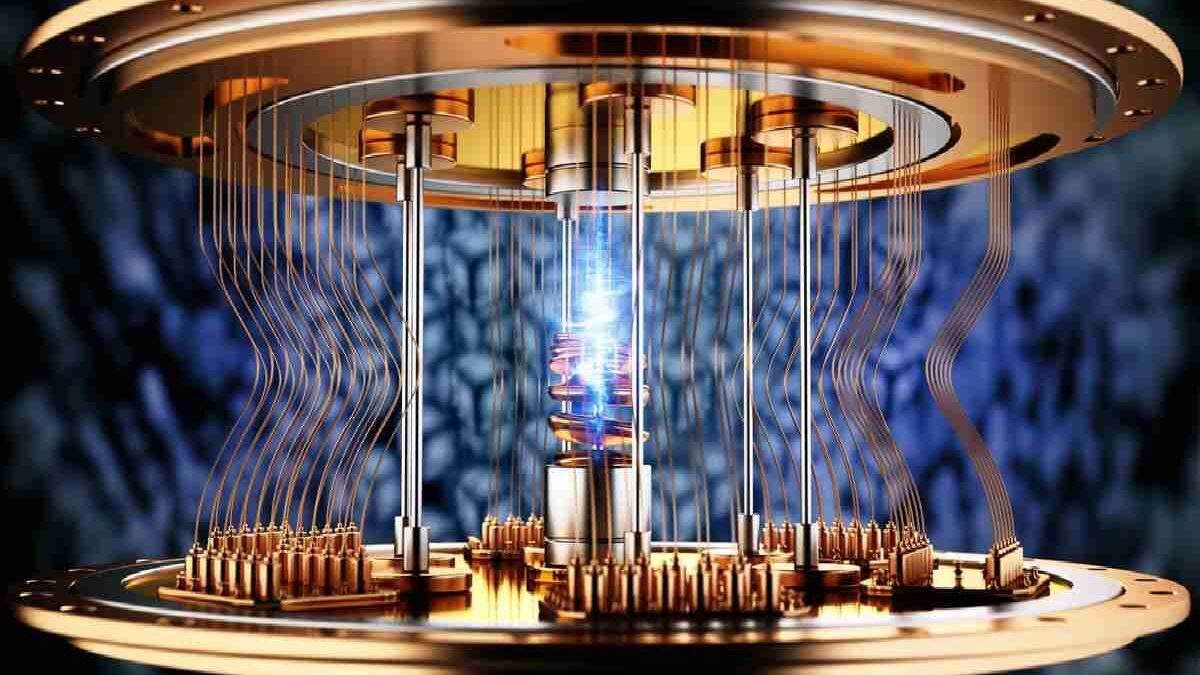
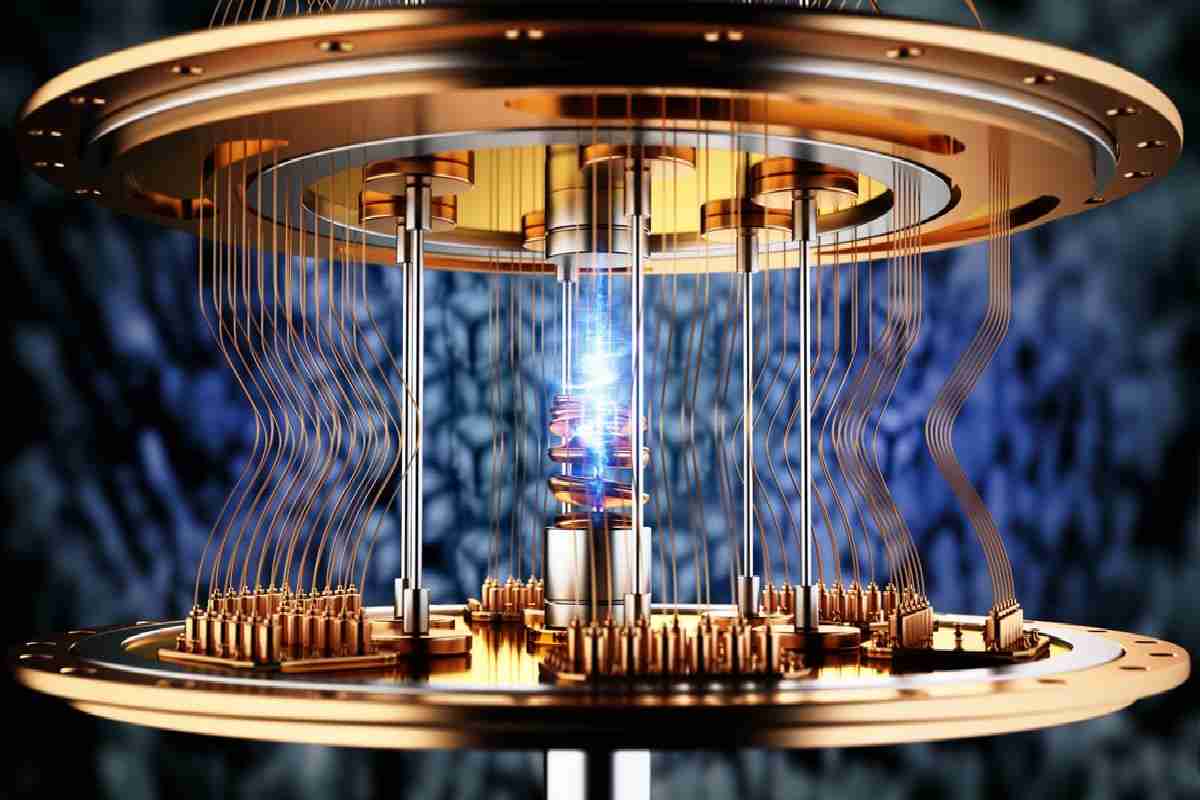
Because they rely on quantum systems, the operating units of these new computers are very sensitive and must remain kept at temperatures shallow, just above absolute zero.
absolute zero = 273°c below zero.
This article belongs to Emerging Technology
What are Quantum Computing?
So, Quantum Computing is a rapidly-emerging technology that harnesses the laws of quantum mechanics to resolve problems too complex for classical computers.
Today IBM Quantum types real quantum hardware. Tools Scientists Just Started Imagining 30 Years Ago, Available to hundreds of thousands of developers. Our engineers regularly deliver increasingly powerful superconducting quantum processors and significant advances in classical quantum orchestration and software. This work drives the quantum computing speed and capacity essential to change the world.
These machines are very different from the classical computers that have existed for over half a century. Here’s a primer on this transformative technology.
Quantum computing is built around a different way of processing information. Classical computers use bits that normally represent either 0 or 1, while quantum computers use qubits that can exist in combinations of states. This property, together with quantum effects such as entanglement and interference, gives researchers new ways to approach certain computational problems.
Quantum computers are not designed to replace ordinary computers in every task. Instead, researchers are exploring where quantum processors could provide useful advantages, particularly in areas involving complex optimization, chemistry, materials science, simulation, and cryptography.
The technology is still developing, and practical quantum systems require careful control of hardware, software, error correction, and environmental conditions. Researchers therefore study quantum computing alongside other areas of advanced technology, including immersive digital environments such as the metaverse, where future computing systems may eventually contribute to simulation, optimization, and large-scale digital experiences.
Why do we want Quantum Computers?
For some issues, supercomputers aren’t that super.
When scientists and engineers encounter complex problems, They look to supercomputers. These are vast classical computers. They often use thousands of traditional CPU and GPU cores. However, even supercomputers struggle to solve certain kinds of problems.
If supercomputers are stuck, it’s probably because big classic machines were asked to solve very complex problems. When traditional computers fail, it’s often because of complexity. Complex problems are problems with many variables that interact in complex ways. Modelling the behaviour of individual atoms in molecules is a complex problem as all the different electrons interact. Arranging ideal routes for hundreds of tankers in the worldwide shipping network is also complicated.
One major reason researchers are interested in quantum computing is that many difficult scientific and industrial problems involve huge numbers of possible combinations. A classical computer may need to examine an enormous search space, while a quantum algorithm can sometimes approach a problem in a fundamentally different way.
Potential applications include discovering new materials, modeling chemical reactions, improving logistics, analyzing financial models, and studying physical systems. However, these benefits depend on the development of reliable hardware and algorithms that can demonstrate a meaningful advantage over classical approaches.
Quantum computing could also become important in cybersecurity because some quantum algorithms have implications for existing cryptographic methods. At the same time, quantum research is contributing to the development of new approaches to secure communications and cryptography.
The connection between quantum technology and digital security also creates broader questions for emerging technologies such as blockchain, digital assets, and NFTs. Readers interested in the relationship between security, encryption, and digital assets can explore NFT and digital-asset security as another example of how technology is changing the way information and ownership are managed online.
Error corrections are existence investigated
Error corrections investigate and explore, and the system under study uses 17 cube bits and operates at a temperature of no more than 0.01 kelvin, very low above absolute zero.
In this heat, the kibbutz is an excellent carrier of electricity that passes through them without resistance. Nine of those 17 cups make up a three-line square. All accounts pass on those nine units, the computer mastermind.
The remaining eight units act as operational control and allow system errors to be under detection. Researchers use quantum error correction to protect quantum information from errors and noise, an important step toward scalable quantum computing. If the cubes can see errors, the system will correct itself. Thanks to this process, the computer can access problems affecting the plan to remain.
“We don’t currently correct errors in the cubes directly. But this is not necessary for most calculations,” says Sebastian Kreiner. And also, co-author of the research paper.
The new research confirms that a fault-correcting system is feasible and practical. But we are not at a time when the quantum computer is still infallible.
Understanding Quantum Error Correction
Quantum error correction is one of the most important challenges in building a useful quantum computer. Qubits are sensitive to noise, temperature changes, electromagnetic interference, and imperfections in the control systems used to operate them.
Researchers therefore look for ways to protect information without destroying the quantum states that contain it. Instead of relying on a single physical qubit, error-correction methods can distribute quantum information across several physical qubits. Additional measurements can then help identify certain errors so the system can respond before those errors spread through a calculation.
This approach can require many physical qubits to create a smaller number of reliable logical qubits. As a result, scaling quantum computers is not simply a matter of adding more processors. Engineers also need better qubit quality, better control electronics, improved cooling, faster error detection, and software capable of coordinating the complete system.
Materials research is another important part of this development. Advances in nanotechnology can influence sensors, processors, materials, and other components used in advanced computing systems. Research into Axiomm Technologies and related nanotechnology applications illustrates how work at very small scales can contribute to broader technology development.
What Does the Paper State for Quantum Computers?
The paper also states: “through high-performance, fast and frequent quantum cycles to correct errors – along with developments in ion fisheries – we have shown that error-correcting quantum computing is possible.”
It is not the only approach to correcting errors. As there have recently been some other potential quantum solutions.
Therefore, today’s quantum computer may not exist in practice. But scientists spare no effort in addressing the dilemmas in their way.
The path toward practical quantum computing will likely involve several technologies working together. Quantum processors will need classical computing systems to manage workloads, monitor devices, and interpret results. Cloud platforms can also give researchers access to quantum hardware without requiring every organization to build its own quantum laboratory.
Quantum computing may eventually contribute to areas that extend beyond computing itself. In materials science, researchers can use simulations to study molecules and advanced materials. In energy research, quantum methods may help scientists investigate chemical processes related to batteries, catalysts, or other systems. In transportation and logistics, optimization techniques may be explored for increasingly complex planning problems.
Space research is another area where advanced computation can have a role. Quantum technologies may eventually support sensing, communications, navigation, and scientific experiments in demanding environments. For readers interested in this broader technology frontier, the topic can be explored alongside developments in space technology.
At the same time, scientists are investigating materials that can interact with light, energy, and matter in new ways. Research into advanced nanomaterials demonstrates how nanoscale engineering can create unusual properties that may contribute to future electronics, energy systems, and other emerging technologies.
The Future of Quantum Computing
The future of quantum computing will depend on more than simply creating a machine with a larger number of qubits. Researchers must improve reliability, reduce errors, simplify system control, and develop algorithms that solve practical problems efficiently.
Another important question is where quantum computing will provide a useful advantage. A quantum computer may excel at a particular scientific calculation while offering little benefit for everyday tasks such as browsing the web, sending email, or editing documents. Classical computers will therefore remain essential even as quantum systems mature.
The development of quantum technology also creates opportunities for new software tools and new technical skills. Programmers, physicists, mathematicians, engineers, cybersecurity specialists, and materials scientists can all contribute to the field. As quantum processors become easier to access through cloud platforms, more developers may experiment with quantum programming and hybrid workflows.
Conclusion
Quantum computing remains one of the most ambitious areas of modern technology. The ability to process information using quantum mechanical principles could open new possibilities for scientific research, optimization, materials discovery, cybersecurity, and other demanding applications.
However, significant technical challenges remain. Error correction, hardware stability, scaling, cooling, software development, and practical performance all require continued research. The work described in this article shows why error correction is such an important part of that journey.
As quantum computing develops, its progress will also connect with other emerging fields, including nanotechnology, space systems, cybersecurity, immersive digital environments, and advanced materials. These relationships show that the future of computing will not depend on one technology alone, but on several fields developing together.